
THE CIRCUIT: An Immersive Silent Disco Ballet

New York Theatre Company
Co-Directors: Josh Zachter and John Kroft
Choreography: Josh Zachter
Original Score and Sound Design: Jacob Ryan Smith
Associate Sound Design: Anna Tobin
Writer: Connor Wentworth
Performers: Manatsu Aminaga, Danielle Louise Bowen, Luke Swaller, Tessa Fungo, Fabricio Seraphin, Arzu Salman, Katie Baik (Swing), Kaitwan Jackson (Swing) Gigi Hausman, Kurt Horney (Swing), Anna Nader (Swing), Shiloh Goodin
June 26, 2026
A site-specific performance unfolding across the streets of DUMBO
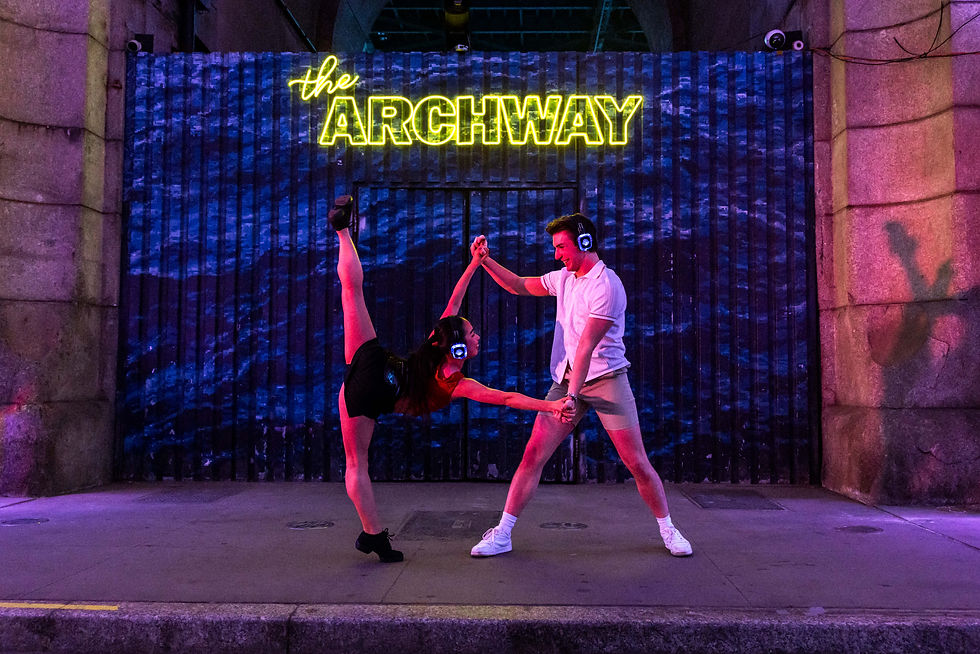
Summer in NYC is always an exciting time to experience dance. Outdoors in parks, on piers, and in plazas, summer performances embrace space as a partner in ways traditional theaters cannot. New York Theatre Company takes this idea one step further by making the city itself a silent collaborator in the performance. Wearing wireless headphones and following guides waving illuminated light sticks, audiences traverse the streets of DUMBO alongside the performers on an immersive tour that fuses dance, theater, and nightlife into a visceral adventure.

Inspired by the 1897 play La Ronde and the 1950 French film of the same name, The Circuit reimagines a cycle of intimate encounters fueled by a pulse-driven EDM score infused with spoken text and internal monologues. As audiences gather and adjust their headphones, pre-show instructions are delivered. Unlike most theater productions, filming and photography are encouraged, as is dancing along, while obstructing pedestrian traffic and interacting with performers are not. Music is already playing in the background—music only we can hear. The experience has begun before we even realize it. Performer Danielle Bowen separates herself from the crowd moving through the plaza and climbs onto a bench. Lit by the possibility of youth and a city bursting with promise, she sets off on a quest for connection and meaning, and we eagerly follow.

As we move to our second location beneath an overpass a few yards away, our band of merry, if slightly confused, spectators pass a bride and groom posing for wedding photos, crowds heading to the restaurants and bars of Lower Manhattan, and commuters weaving through on bicycles. Some pedestrians, like the wedding couple, are delighted by this zany, secretive, almost flash mob–esque happening. Others look confused, intrigued, or annoyed. Many don't pay us any mind at all. As we meet more characters—a famous heartthrob, a faithless temptress and her dutiful wife, and a group of young, wild-at-heart club kids—a narrative begins to unfold. Like the play and film that inspired it, The Circuit tells the story of a circular chain of romantic encounters, some fleeting, some enduring, all marked by impermanence and chaos.
The movement language—contemporary ballet performed in sneakers—offsets a textured, driving score more commonly reserved for clubs and raves. While not earth-shattering in its complexity, nor needing to be, the choreography navigates its setting with precision, shifting from classical forms to improvised, ecstatic expression as the performance moves from concrete streets to narrow dirt paths, through trees to rocky outcroppings overlooking the East River, before parading around Jane's Carousel, a beautifully restored 1922 antique merry-go-round.

Through sound and imagery that are both natural and composed, audiences are treated to a split experience: at once private and cinematic, yet public and unpredictable. The boundary between spectator and participant dissolves, and DUMBO's familiar landscape comes alive in unexpected ways.
The concept of immersive art is hardly new, and New York City offers no shortage of such experiences: ARTE Museum New York, Sleep No More, Life and Trust, Masquerade, Speakeasy, Die Softly, to name a few. The Circuit raises the stakes by including not only ticketed participants but also the unwitting public, introducing variables that other immersive productions largely avoid. Automotive traffic, crowds gathering along the waterfront on a perfect June evening, children wielding ice cream cones, couples taking selfies against a skyline awash in pastel hues, and lines snaking outside restaurants with outdoor seating all become part of the performance. Curious onlookers smile, catcall, and stare quizzically at dancers moving to music they cannot hear. And we, silent spectators wearing headphones, become part of the spectacle as well—both watching and being watched.

Some of what we witness is the innocence of shy, youthful infatuation. Bowen's cherubic face and precise balletic lines beautifully convey a young woman swept away by the attention of a famous heartthrob, played by Luke Swaller. But in a duet that follows on a raised storefront platform, that innocence gives way to seductive allure. Swaller and Tessa Fungo, a club performer dripping with confidence and sex appeal, perform a racy duet filled with suggestive partnering and the thrill of forbidden desire.
Soon after, we meet Fungo's wife, played by Shiloh Goodin, who reveals that the couple had an "arrangement" shattered by Fungo's affair. From there, we are led beneath the Manhattan Bridge into a euphoric club scene where Goodin attempts to lose herself in the sweaty embrace of The Gentleman (Fabricio Seraphin). Innocence and eroticism intertwine in a provocative duet between Seraphin and Arzu Salzman, who appears wearing an S&M-inspired mask. Although the original 1897 work did not portray same-sex relationships, The Circuit embraces a spectrum of sexual identities and desires, lending the story a distinctly contemporary edge.

Later, Seraphin and Salzman perform a joyous, fast-moving duet filled with sweeping lifts that travel around Jane's Carousel, forcing spectators to jog to keep pace. As each new character and romantic entanglement is revealed, so too is a new corner of DUMBO, until we ultimately find ourselves back where we began, at Archway Plaza. Bowen returns with us, still exuberant yet subtly transformed, her search for meaning giving way to quiet self-possession. Rather than disappearing into the city's restless energy, she claims her place within it, and in doing so, reminds us to do the same.


Comments